Smart Sprinkler Controller Guide for Denver Homes
A smart sprinkler controller is one of the most impactful upgrades a Denver homeowner can make. By automating irrigation based on real-time local weather data, these devices can cut outdoor water use by up to 50% — saving thousands of gallons and hundreds of dollars per season.
We install and configure both Rachio and Hunter Hydrawise systems across the Denver metro. This guide covers what to look for, how the two top brands compare, and what professional installation actually gets you.
Key Takeaways
- Significant water savings: EPA WaterSense-certified controllers reduce outdoor water use by up to 50%, saving thousands of gallons annually.
- Lower utility bills: Less water means a lower Denver Water bill — payback period is typically one to two seasons.
- Manage from anywhere: Control your system from a smartphone app, whether you’re at work or out of town.
- Healthier landscape: Precise, weather-based watering prevents the over- and under-watering that damages turf and plant roots.
- Rebate eligibility: Denver Water offers rebates for qualifying smart controllers — check the Denver Water website for current amounts and eligibility.
What Is a Smart Sprinkler Controller?
A smart sprinkler controller — also called a WiFi sprinkler controller — is an advanced irrigation timer that connects to the internet. Unlike traditional timers that run a fixed schedule regardless of conditions, a smart controller pulls real-time local weather data (temperature, rainfall, humidity, wind) and automatically adjusts watering accordingly. This process uses a principle called evapotranspiration (ET) to ensure your landscape gets exactly what it needs — no more, no less.
Beyond rain delays, smart controllers factor in:
- Plant type — Grass, shrubs, trees, and flower beds all have different water needs.
- Soil type — Denver’s clay-heavy soils retain water longer than sandy soils, which matters for run time and cycle scheduling.
- Sun exposure — Full-sun zones need more water than shaded areas.
- Nozzle type — Precipitation rate of each head affects how long each zone should run.
- Slope — Sloped areas require shorter, more frequent cycles to prevent runoff.
The EPA’s WaterSense program certifies controllers that meet efficiency standards. A 2021 EPA study found that WaterSense-labeled controllers save nearly 7,600 gallons annually for the average home.
Why Denver Homeowners Need One
Denver’s semi-arid climate — hot, dry summers with unpredictable afternoon thunderstorms — makes efficient irrigation critical. Outdoor watering accounts for up to 50% of a household’s water use during summer, according to Denver Water.
Climate fit: A traditional timer waters on schedule regardless of conditions. A smart controller skips cycles when rain is forecast or has just fallen. For Denver’s variable weather, that intelligence pays off quickly.
Compliance: Denver Water implements seasonal watering rules — specific days, approved hours. A smart controller makes it easy to program around those restrictions without thinking about it every season.
ROI: The device and professional installation typically run $350–$800 total. Most homeowners recover that cost in water savings within one or two seasons. Add in Denver Water rebates and the math gets even better.
Rachio vs. Hunter Hydrawise: Which Is Right for You?
Both brands lead the market. The difference comes down to user experience and system complexity.
| Feature | Rachio 3 | Hunter Pro-HC (Hydrawise) |
|---|---|---|
| Best for | Tech-forward homeowners, smart home users | Complex systems, homeowners who want pro-grade diagnostics |
| App | Very user-friendly, clean interface | More data-dense, built for contractors and advanced users |
| Smart home | Alexa, Google Assistant, IFTTT | Alexa, Control4 |
| Key technology | Weather Intelligence Plus | Predictive Watering Technology |
| Flow monitoring | Optional wireless flow meter | Integrates with professional wired flow meters |
| Installation | Designed for simplicity | Typically installer-configured for full benefit |
Rachio 3: The Smart Home Favorite
Rachio has built its reputation on an intuitive app and deep smart home integration. Weather Intelligence Plus pulls data from over 300,000 weather stations to fine-tune every watering cycle. If you want something that’s easy to manage day-to-day but runs on powerful logic under the hood, Rachio is an outstanding choice.
Our recommended Rachio controller for Denver homes:
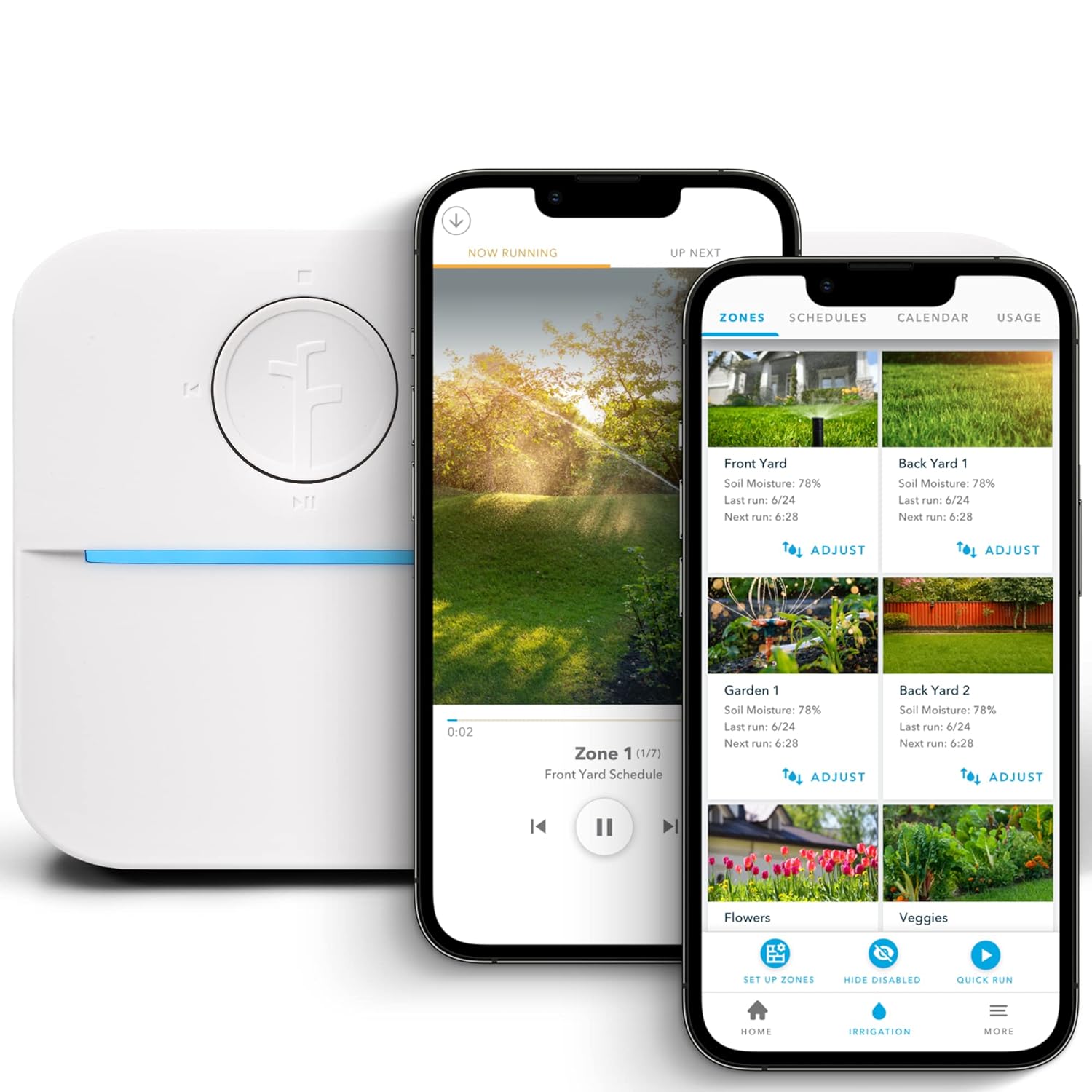
Weather Intelligence Plus adjusts watering automatically based on local conditions — cuts outdoor water use by up to 50%.
Check Price on Amazon →*As an Amazon Associate, we earn from qualifying purchases.
Hunter Pro-HC (Hydrawise): The Professional’s Choice
Hunter has been a trusted name in irrigation for decades, and Hydrawise reflects that professional heritage. The Pro-HC supports higher zone counts, integrates with wired flow meters for leak detection, and offers granular diagnostic data that contractors rely on. Predictive Watering Technology analyzes local weather forecasts to fine-tune timing and duration before conditions change.
For larger or more complex properties, or for homeowners who want the most detailed reporting and control, a professionally configured Hydrawise system is the superior option.
Our recommended Hunter Hydrawise controller:
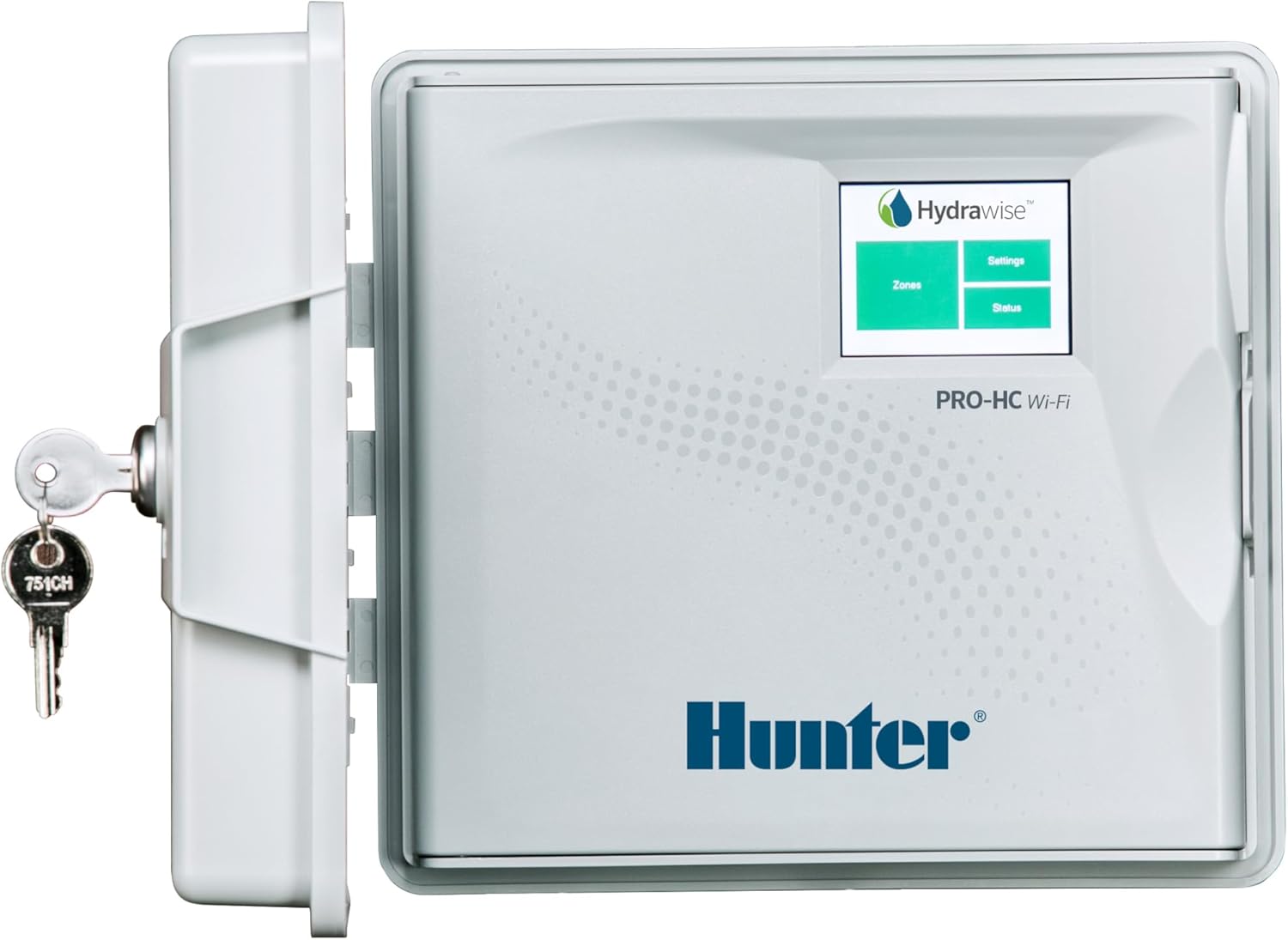
Pro-grade smart controller with predictive watering and detailed zone diagnostics — the pro installer's choice for complex systems.
Check Price on Amazon →*As an Amazon Associate, we earn from qualifying purchases.
How to Upgrade to a WiFi Sprinkler Controller
Step 1: Assess your current system
Count your irrigation zones — this determines which model to buy. Controllers come in 4, 6, 8, 12, and 16-zone versions. Also confirm you have a solid WiFi signal (at least two bars) at your current controller’s location.
Step 2: Choose the right controller
Match zone count first, then decide: Rachio for simplicity and smart home integration (by far the overwhelming favorite), Hunter for professional-grade features and complex systems (less than 1% of my clients use this).
Step 3: DIY or professional installation?
DIY: Turn off power to the old controller, photograph the existing wiring, label each wire, remove the old unit, mount the new one, reconnect wires to their terminals, and configure zones via the app. Doable if you’re comfortable with basic wiring.
Professional: The hardware swap is the easy part. What matters is zone configuration — soil type, plant type, nozzle precipitation rate, and slope for each zone. Incorrect settings mean the controller runs on bad assumptions. A professional installer gets this right from the start, which is where the real water savings come from.
What Professional Installation Gets You
A certified installer does more than mount a device on the wall. They:
- Configure every zone correctly — soil type, sun exposure, plant type, nozzle PR, and slope entered accurately for Denver conditions
- Optimize the schedule — cycle-and-soak programming for clay soils, compliance with Denver Water watering rules
- Test and verify — confirm every zone fires correctly and the weather integration is active
The Irrigation Association estimates that a properly managed irrigation system reduces water waste by 30% or more. That savings is only possible when the system underneath the smart controller is dialed in.
Frequently Asked Questions
How much water can I actually save? Most Denver homeowners see a 30–50% reduction in outdoor water use. For an average property, that’s several thousand gallons and $100–$300 per season, depending on lot size and current habits.
Are there smart controller rebates from Denver Water Denver Water has historically offered rebates for WaterSense-certified controllers. These programs change year to year — check the official Denver Water website for current availability, qualifying products, and how to apply.
What happens if my WiFi goes down? The controller runs the last saved schedule from onboard memory. It won’t make real-time weather adjustments until connection is restored, but watering continues.
Do I still need to winterize with a smart controller? Yes. The controller manages scheduling — it doesn’t affect your pipes and heads. Blow-out service each fall is still required to prevent freeze damage during Denver winters.
What does a WiFi sprinkler controller upgrade cost? The controller itself runs $150–$300 depending on brand and zone count. Professional installation in the Denver area typically adds $200–$500, covering hardware swap, wiring, and full zone configuration.
Ready to Schedule Installation?
You can book a smart controller installation directly through our online scheduler. If you’ve already purchased a controller or plan to — great. We actually encourage homeowners to buy the device themselves and have it on-site before we arrive. There are a couple of good reasons for this: any warranty issues are much easier for you to handle directly with the retailer or manufacturer, and you pay no markup on the hardware since you’re buying it at retail price. Same goes for Denver Water rebates — since you purchased the device, you can submit the rebate application directly and keep the full amount. We charge for the installation and configuration work, not the equipment.