A complete Denver lawn fertilization program has four applications: spring (March–April) for green-up, early summer (late May–June) to sustain growth, late summer (mid-August) for stress recovery, and fall (September–October) for root storage before dormancy. Fall is the single most important application — nutrients stored in roots fuel spring green-up. Most Denver lawns also benefit from annual core aeration (fall preferred) to combat clay soil compaction. Fall overseeding combined with aeration produces the best results. Schedule online for current pricing.
Keep Your Denver Lawn Healthy Year-Round
Great irrigation is only half the battle. If your lawn still looks tired despite proper watering, the soil itself probably needs attention. A well-maintained irrigation system is only part of the equation for a beautiful lawn. Our comprehensive lawn care services work hand-in-hand with proper watering to give your grass the nutrients, air circulation, and seed density it needs to thrive in Colorado’s challenging climate.
Denver’s unique combination of intense sun, low humidity, clay soils, and dramatic temperature swings requires a specialized approach to lawn care that differs from other regions.
Our Lawn Care Services
We offer a complete range of seasonal lawn care services designed specifically for Denver-area lawns. These services can be bundled into seasonal packages or scheduled individually based on your lawn’s needs.
Fertilization Programs
Professional fertilization provides your lawn with essential nutrients that Colorado’s clay-heavy soils often lack.
Spring Fertilization
Timing: Early to mid-spring (typically March-April)
Spring fertilization jumpstarts your lawn after winter dormancy. We apply a balanced fertilizer that:
- Promotes strong root development after winter stress
- Provides nitrogen for early green-up
- Includes micronutrients often depleted in Front Range soils
- Prepares grass for the demands of summer heat
Why it matters: Lawns emerging from winter need nutrients to recover from dormancy. Spring fertilization sets the foundation for a healthy growing season.
Early Summer Fertilization
Timing: Late May to early June
As temperatures rise, your lawn’s nutritional needs change. Early summer fertilization:
- Sustains growth momentum from spring
- Provides slow-release nitrogen for consistent feeding
- Strengthens grass before peak summer heat
- Supports root depth development for drought resistance
Why it matters: This application bridges the gap between spring growth and summer stress, ensuring your lawn doesn’t run out of nutrients during its most active growing period.
Late Summer Fertilization
Timing: Mid to late August
Late summer fertilization prepares your lawn for fall recovery:
- Replenishes nutrients depleted during summer
- Supports recovery from heat and drought stress
- Begins preparation for fall root development
- Maintains color and density heading into autumn
Why it matters: Denver summers are hard on lawns. This application helps grass recover while there’s still active growing time before winter.
Fall Fertilization
Timing: September to early October
Fall fertilization is considered the most important application of the year:
- Promotes deep root growth before winter dormancy
- Stores nutrients in root systems for spring green-up
- Strengthens grass against winter damage
- Often called “winterizer” fertilization
Why it matters: The nutrients applied in fall are stored in the root system and provide the energy for your lawn to green up quickly in spring. Skipping fall fertilization often results in slow, patchy spring recovery.
Aeration Services
Core aeration is essential for Denver lawns, especially those growing in our heavy clay soils.
What is Core Aeration?
Core aeration removes small plugs of soil from your lawn, creating channels that allow:
- Air to reach grass roots
- Water to penetrate deeper into soil
- Nutrients to access the root zone
- Roots to expand and strengthen
Spring Aeration
Timing: April to early May
Spring aeration is beneficial for lawns that:
- Have heavy foot traffic
- Show signs of soil compaction
- Struggled the previous year
- Are being overseeded in spring
Benefits: Relieves compaction from winter, improves water penetration before summer irrigation season, and prepares soil for fertilizer uptake.
Fall Aeration
Timing: September to early October
Fall aeration is generally preferred in Colorado because:
- Cool-season grasses recover quickly in fall conditions
- Reduced weed pressure compared to spring
- Optimal timing for overseeding
- Roots actively grow in fall, quickly filling aeration holes
Benefits: Maximum recovery time before winter dormancy, ideal conditions for seed germination if combined with overseeding, and improved water penetration for fall rains.
Why Denver Lawns Need Aeration
Colorado’s clay soils compact easily, especially in high-traffic areas. Compacted soil:
- Prevents water from reaching roots (leading to runoff and waste)
- Restricts root growth
- Limits nutrient availability
- Creates thin, weak turf prone to weeds and disease
Recommendation: Most Denver lawns benefit from aeration at least once per year, with heavily used lawns benefiting from both spring and fall aeration.
Overseeding Services
Overseeding introduces new grass seed into your existing lawn, increasing density and improving overall health.
Why Overseed Your Lawn?
Over time, even well-maintained lawns thin out due to:
- Normal grass plant lifecycle (grass plants live 5-7 years)
- Heat and drought stress
- Disease and insect damage
- Foot traffic wear
- Winter damage
Overseeding replenishes grass plant population, fills in thin areas, and can introduce improved grass varieties better suited to current conditions.
Spring Overseeding
Timing: March to early April
Spring overseeding works best when:
- Addressing winter damage
- Filling bare spots from snow mold or other issues
- Combined with spring aeration
Considerations: Spring-seeded grass faces summer heat stress before establishing deep roots. Consistent watering is critical for success.
Fall Overseeding
Timing: Late August to mid-September
Fall is the ideal time for overseeding in Colorado:
- Soil is warm (promoting germination) while air is cooling
- Reduced weed competition
- Fall rains supplement irrigation
- New grass has fall and spring to establish before summer stress
Best results: Fall overseeding combined with core aeration allows seed to fall into aeration holes, providing excellent seed-to-soil contact and protection for germinating seeds.
Denver Neighborhood Lawn Care Tips
Different neighborhoods face unique lawn care challenges:
Cherry Creek & Wash Park: Mature trees create shade challenges. Consider shade-tolerant grass varieties when overseeding.
Highlands Ranch & Centennial: Newer developments often have compacted builder soil requiring more frequent aeration.
Lakewood & Arvada: Heavy clay soils benefit from cycle-and-soak watering and annual aeration.
Aurora: Variable soil conditions may require customized fertilization programs.
Seasonal Lawn Care Programs
For best results, we recommend combining services into a comprehensive seasonal program. Here’s how our services work together throughout the year:
Spring Program (March - May)
- Spring Fertilization
- Spring Aeration (if needed)
- Spring Overseeding (if needed)
Summer Program (June - August)
- Early Summer Fertilization
- Late Summer Fertilization
Fall Program (September - November)
- Fall Fertilization
- Fall Aeration
- Fall Overseeding
Package Program Information
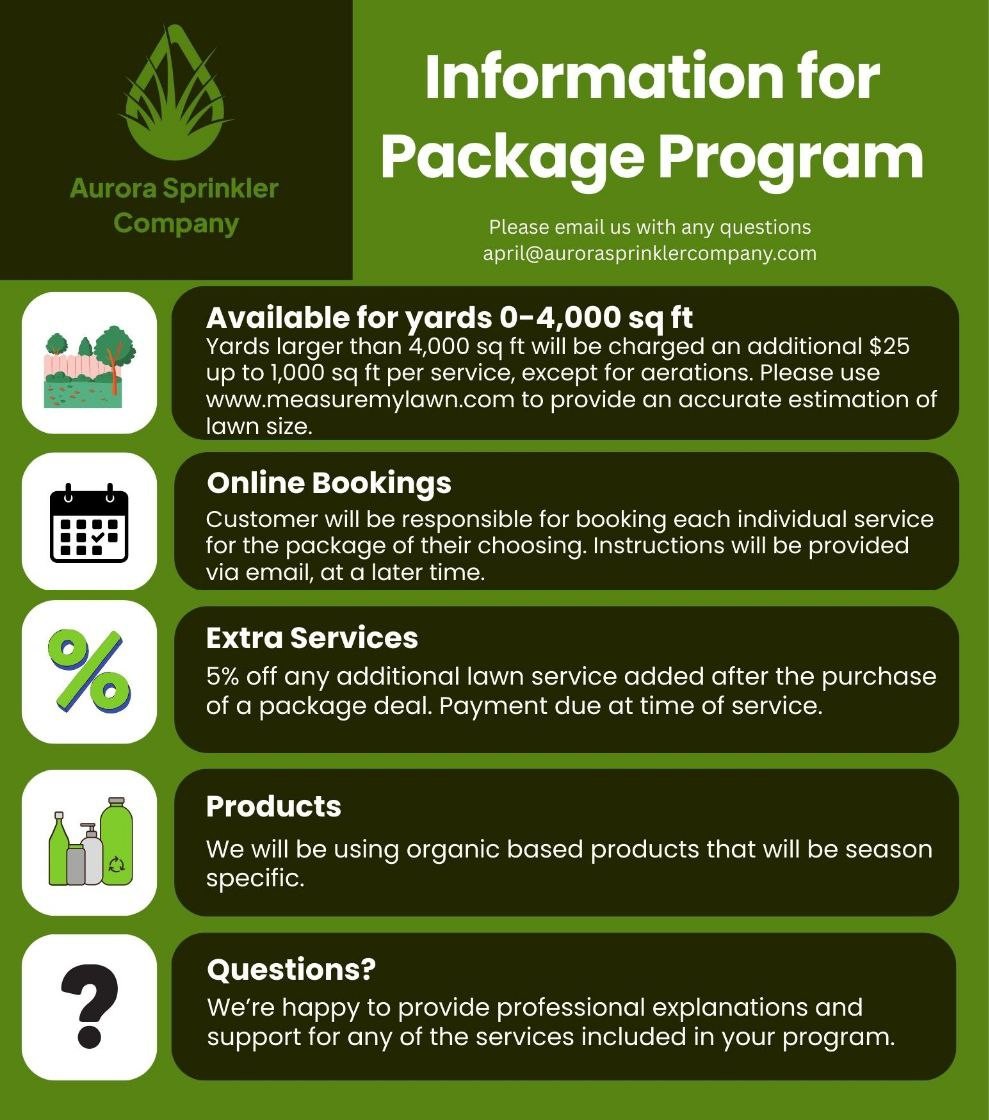
Package Program Highlights:
- Service Area: Available for yards 0-4,000 sq ft (larger yards available with additional fee)
- Convenient Online Booking: Customer-managed scheduling for maximum flexibility
- Additional Services: 5% off any extra lawn service added after package purchase
- Quality Products: Organic-based, season-specific products
- Professional Support: Expert guidance available for all services
How Lawn Care and Irrigation Work Together
Your lawn care program and irrigation system must work in harmony for best results.
After Fertilization
- Water lightly to help fertilizer reach the soil
- Avoid heavy watering that washes fertilizer away
- Resume normal irrigation schedule after 24-48 hours
After Aeration
- Water immediately to help soil plugs break down
- Maintain consistent moisture for 2-3 weeks
- Plugs will decompose naturally within a few weeks
After Overseeding
- Keep soil consistently moist (not saturated) until germination
- Water lightly 2-3 times daily for the first 2-3 weeks
- Gradually transition to deeper, less frequent watering
- New grass typically germinates in 7-21 days depending on variety
Need help adjusting your irrigation schedule? We can assist with controller programming during our service visits.
Frequently Asked Questions
When is the best time to fertilize my lawn in Denver?
Fall fertilization is considered most important, as nutrients are stored for spring green-up. A complete program includes spring, early summer, late summer, and fall applications for optimal results.
How often should I aerate my lawn?
Most Denver lawns benefit from annual aeration. Heavily compacted or high-traffic lawns may benefit from both spring and fall aeration. Clay soils, common in the Front Range, compact easily and typically need yearly attention.
Can I overseed without aerating?
Yes, but results are significantly better when overseeding is combined with aeration. Aeration creates holes that provide seed-to-soil contact and protect seeds from birds and wind.
Should I water after aeration?
Yes, water your lawn after aeration to help soil plugs break down and begin the recovery process. The soil plugs will decompose naturally within 2-3 weeks.
Why is my lawn thin even though I water regularly?
Proper watering is only one component of lawn health. Thin lawns often result from soil compaction, nutrient deficiency, or simply aging grass plants. A combination of fertilization, aeration, and overseeding addresses all these issues.
Is spring or fall better for overseeding in Colorado?
Fall is generally preferred because soil temperatures are warm for germination, air temperatures are cooling (reducing stress on young grass), weed competition is minimal, and new grass has time to establish before summer heat.
How long after overseeding can I mow?
Wait until new grass reaches 3-4 inches before the first mow. This typically takes 3-4 weeks after germination. Mow at a high setting (3 inches) for the first few cuts.
Do I need to stay off my lawn after aeration or overseeding?
Minimize foot traffic for 2-3 weeks after overseeding to avoid disturbing germinating seeds. After aeration alone, you can resume normal activity immediately, though the soil plugs may be unsightly for a couple of weeks.
Schedule Your Lawn Care Services
Your lawn will thank you. Our seasonal services complement your irrigation system to create a healthier, more resilient landscape that stands up to Colorado’s climate.
Pick your services and schedule – all pricing is right there in the scheduler.